
Sensors and RTD Pressure Guage
MI THERMOCOUPLES (AL, ALSTE, STE type thermocouples)
Type: J, K, T, E, N
Element Size (MI): 0.25, 0.5, 1, 1.5, 1.6, 3, 4.5, 4.8, 6, 8, 10 mm). Other Sizes on request.
Protection Sheath: SS321, SS316, SS310, INCONEL 600, 601, Platinum, Pyrosil, Nimonic, HRS 446, Molybdenum etc. Configuration: Simplex/Duplex/Multipoint. Special: As per ASTM E235 for nuclear application.
- Excellent bending properties
- Electrically isolated – even for small diameters
- Rapid response times thanks to vacuum design
- Pressure-tight, vacuum-tight and resistant to vibrations Mostly customised
- Application: Automotive test bench, process, furnace etc
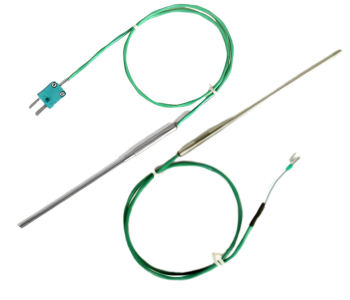
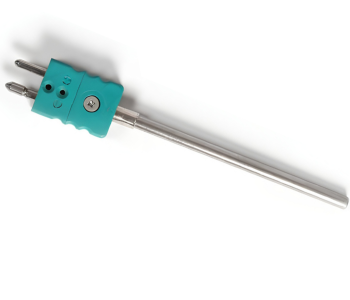
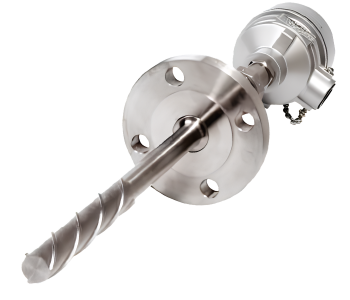
MINIATURE THERMOCOUPLES
Type: J, K, T, E, N, R, S, B
Element Size (MI):0.25, 0.5, 1, 1.5, 3 (mm). Other Sizes on request
Protection Sheath:SS316, SS310, INCONEL 600, Pyrosil, Nimonic, Molybdenum etc.
Configuration:Simplex/Duplex/Multipoint, Swaged (other size on request)
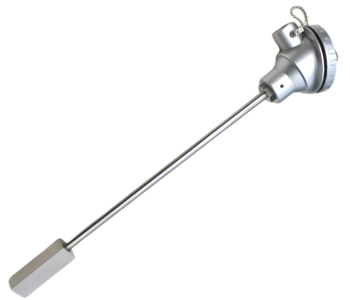
THERMOCOUPLES WITH THERMOWELLS / PROTECTION TUBES
Type: J, K, T, E, N
Element Size (MI): 0.25, 0.5, 0.75, 1, 1.5, 2,3, 4.5, 6, 8 (mm). Other Sizes on request.
(Non-MI): 1.6, 2, 2.5, 3.2 (mm), Other Sizes on request
Protection Sheath:SS304, SS321, SS316, SS310 HRS 446, INCONEL 600/601/800, Nickel, Hastalloy, Titanium, Tantalum, Ceramic 610 & C -799, Silicon Carbide, Monel, Nimonic, Molybdenum etc.
Configuration: Simplex/Duplex/Multipoint
Application: Cement, Chemical, process, Furnace industry, Aerospace, Automotive Industry, Forging, Refrigeration, Power Plant, Mining, Petro Chemical
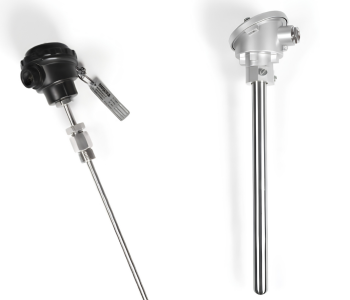
- Process-optimized thermowells
- Special models designed to meet CQI-9 and AMS 2750G, ASTM requirements
- Customized as per demand for the customer
- Expertise in technical design
- Product refinement with functional coatings and calibration
- Standardized fittings and measuring inserts
- Fast-response versions with tapered measuring tips
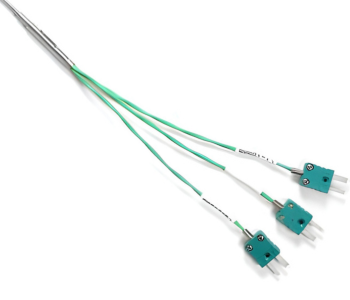
MULTI-POINT THERMOCOUPLE
A multi-point thermocouple is a temperature-sensing device that measures temperatures at multiple points or locations. It consists of multiple thermocouple junctions connected to a single wire or cable.
Types of Multi-Point Thermocouples:
Multi-Junction Thermocouple: Multiple thermocouple junctions connected in series or parallel.
Thermocouple Array: Monitors temperatures in chemical processing, power generation, or oil and gas.
Heat transfer studies: Measures temperature distributions in research and development.
Aerospace: Measures temperatures on aircraft and spacecraft surfaces.
REFRACTORY THERMOCOUPLES
Type Sheath Material : S, R, B & C (operating temperature upto 2300°C) : Platinum, Rhodium, Tantalum, Rhenium, Molybdenum, Inconel 600, Ceramic etc.
Sheath Dia : 1.6, 3.2, 6.4, 8.0 mm Standard
Transition Sleeve : SS316 or INCONEL
Insulation Material : Magnesium Oxide, Aluminium Oxide, Beryllium Oxide, Hafnium Oxide
- For oxidizing, reducing and inert gas atmospheres
- Pressure and vacuum-tight versions available in a range of models
- Also available as multi-point thermocouples
- Custom designs Replaceable thermowells
- Various high-temperature materials in stock for thermowells, insulation and thermocouples
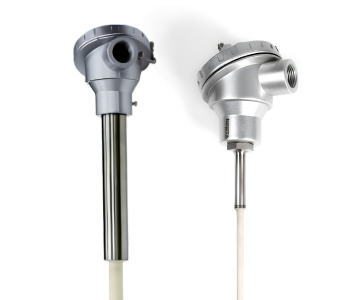
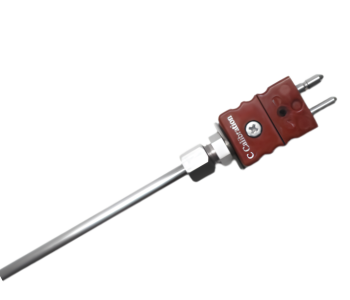
EXOTIC THERMOCOUPLES
Large range of thermocouples designed to measure temperatures up to 1,200°C directly at its warehouse. Available options include thermocouples with insulation made from fluoroplastics FEP, PFA and PTFE as well as thermocouples insulated with the polyamide material Kapton or glass fibre and ceramic materials.
- Suitable for temperatures up to 2300°C
- Suitable for vacuum, inert, oxidizing and reducing atmospheres
- Transition style thermocouples available to reduce costs
- Wide variety of termination options available
- Long term stability
- Various additional tests available to validate integrity
SKIN TYPE THERMOCOUPLE HEAD TYPES
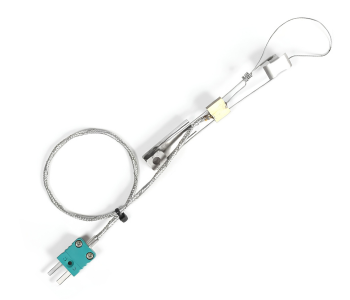
A weld pad thermocouple is a type of thermocouple designed for temperature measurement on surfaces, particularly in welding applications. It consists of a thermocouple junction attached to a flat, flexible pad.
Characteristics:
Flexible pad: Adapts to irregular surfaces High-temperature capability: Withstands welding temperatures Fast response time: Quickly measures temperature changes Accurate readings: Provides precise temperature measurements Durable: Resists environmental factors like moisture and vibration
Applications: Welding monitoring and control Heat treatment processes Forging and casting Engine and turbine monitoring Aerospace and automotive industries Temperature range: -200°C to 1000°C Insulation material: Ceramic, fiberglass, or mineral insulation
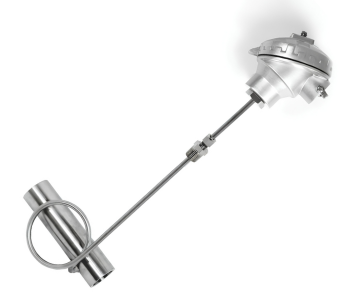
When selecting a skin type thermocouple head type, consider factors like:
- Surface shape and size
- Temperature range and accuracy requirements
- Attachment method and durability needs
- Environmental conditions (e.g., moisture, vibration)
WELD PAD THERMOCOUPLE
Large range of thermocouples designed to measure temperatures up to 1,200°C directly at its warehouse. Available options include thermocouples with insulation made from fluoroplastics FEP, PFA and PTFE as well as thermocouples insulated with the polyamide material Kapton or glass fibre and ceramic materials.
- Suitable for temperatures up to 2300°C
- Suitable for vacuum, inert, oxidizing and reducing atmospheres
- Transition style thermocouples available to reduce costs
- Wide variety of termination options available
- Long term stability
- Various additional tests available to validate integrity
INSULATED THERMOCOUPLE WIRES
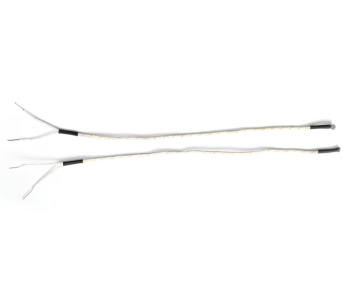
Large range of thermocouples designed to measure temperatures up to 1,200°C directly at its warehouse. Available options include thermocouples with insulation made from fluoroplastics FEP, PFA and PTFE as well as thermocouples insulated with the polyamide material Kapton or glass fibre and ceramic materials.
- Numerous material combinations in stock
- Insulation materials for temperatures up to over 1,200°C
- Small quantities available from 10 meters
- Custom lengths available
SPECIAL THERMOCOUPLE
- Disc Pad
- Disc brake
- Needle Type
- Weld Pad
- Weld Plate
MINERAL INSULATED RTDs
Type: Pt 100, 200, 500, 1000 cu-50, 53 etc.
Connection: 2, 3, 4 wire Element Dia: 1.5, 2, 3, 4, 4.8, 6, 8 mm. Other Sizes on request.
Configuration: Simplex/Duplex/Others
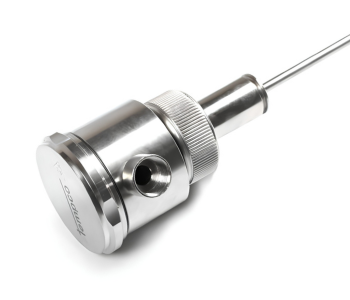
Due to their small diameter, they offer very short response times and are suitable for hard-to-reach, winding spots and narrow openings. Sheathed resistance thermometers are suitable for temperature monitoring and process control. They measure thermal conditions in gaseous and liquid media, on solid surfaces as well as in tanks, pipes, apparatus, and machines. Rapid response times at diameters < 1.5mm
- Particularly shockproof
- Excellent flexibility
- Chemical resistance
- Application range from -200°C to +660°C
- High precision up to 1/10 DIN i.e (0.03°c)
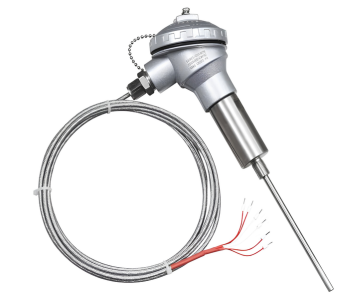
TUBE TYPE RTD's NON - MI
- They are designed to take measurements in liquid and gaseous media at temperatures -200°C to 600°C and, in exceptional cases, up to 850°C. Connection: 2, 3, 4 wire Element Dia: 1.5, 2, 3, 4, 4.8, 6, 8 mm, Other Sizes on request Application: Automotive test bench, process, furnace, Pharma industry etc
- Application range -200° to +600°C
- Heat-resistance, pressure-tight and gas-tight
- Replaceable measuring insert
- Variable custom connection
- Custom special solutions
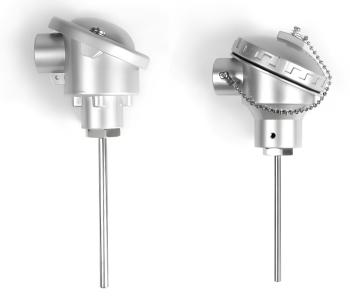
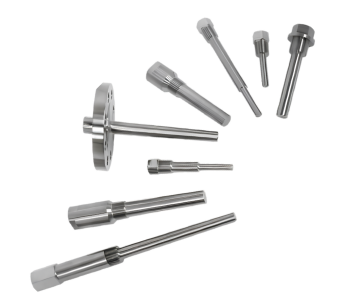
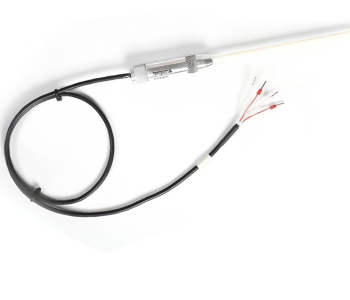
RTDs WITH THERMOWELLS/PROTECTION TUBES
Type: Pt 100, 200, 500, 1000 etc.
Element size (MI): Wire wound ceramic encapsulated Wire wound glass encapsulated Thin film ceramic encapsulated
Connection: 2, 3, 4 wire
Accuracy: Class A, B, 1/2, 1/3, 1/5, 1/10, DIN Protection Sheath: SS304, SS321, SS316, SS310, Inconel 600/800, HRS 446, Hastalloy, Monel etc.
Configuration: Simplex/Duplex/Others
Application range -200° to +600°C Heat-resistance, pressure-tight and gas-tight Replaceable measuring insert Variable, custom process connection Custom special solutions
SPECIAL RTDs
- SSPRT Semi Standard Platinum Resistance Thermometer Platinum Resistance Thermometer
- Slide shoe bearing RTDs Vibration proof RTDs for Bearing & DG sets
- Motor & Transformer winding temperature RTDs
- Handheld & Probe in various designs
- RTDs with IBR approved Thermowells
- Strap on RTDs for nuclear application
- High Accuracy RTDs upto 1/10 DIN l (0.03°c)
THERMISTOR
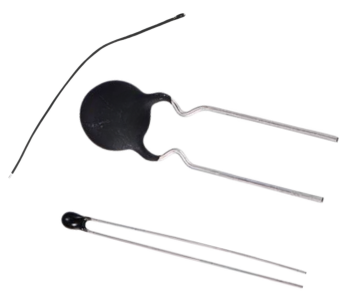
A thermistor is a type of temperature-sensing device that exhibits a change in electrical resistance in response to a change in temperature. Thermistors are made from semiconductor materials and are available in two types:
NTC (Negative Temperature Coefficient): Resistance decreases as temperature increases.
PTC (Positive Temperature Coefficient): Resistance increases as temperature increases.
Thermistor Applications:
Temperature measurement: Air, water, soil, and surface temperatures. Temperature control: HVAC, refrigeration, and industrial processes. Overheat protection: Electronic devices, motors and transformers. Medical devices: Temperature monitoring and control.
THERMOCOUPLE AND RTD CABLES
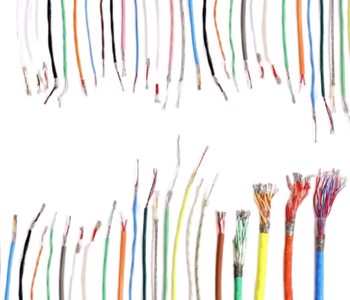
Thermocouple and RTD (Resistance Temperature Detector) cables are specialized cables designed to connect temperature sensors to measurement instruments or control systems. Here are some key characteristics and considerations:
Thermocouple Cables:
- Material : Thermocouple cables are made from thermocouple alloys (e.g., K, J, T, E, N) or compensating materials.
- Construction : Thermocouple cables have two or more conductors, often with a shield and insulation.
- Accuracy : Thermocouple cables can affect measurement accuracy; choose cables with minimal thermal gradient and electromagnetic interference (EMI) sensitivity.
- Length : Longer cables can introduce measurement errors; use the shortest cable possible.
RTD CABLES
Material : RTD cables are typically made from copper or other conductive materials.
Construction : RTD cables have two, three, or four conductors, often with a shield and insulation. RTD cables can affect
Accuracy : measurement accuracy; choose cables with minimal resistance and EMI sensitivity.
Length : Longer cables can introduce measurement errors; use the shortest cable possible.
Considerations:
Temperature Range Environmental Conditions : Choose cables suitable for the temperature range of your application. Consider cables with appropriate insulation, shielding, and materials for exposure to moisture, chemicals, or extreme temperatures.
EMI and RFI : : Use shielded cables to minimize electromagnetic interference (EMI) and radio-frequency
Calibration : Calibrate your temperature measurement system, including the cable, for optimal accuracy.
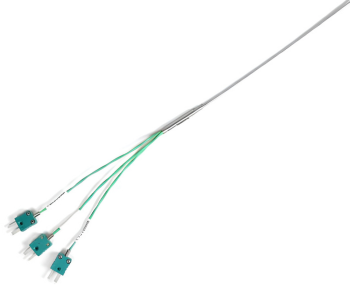
When selecting thermocouple and RTD cables, consult the manufacturer’s specifications and consider factors such as temperature range, accuracy requirements, environmental conditions, and cable length to ensure reliable and accurate temperature measurements.
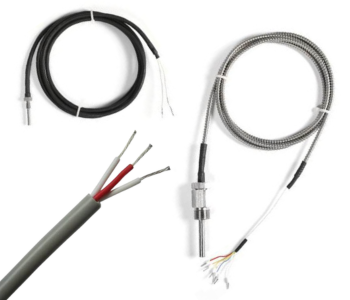
A bearing RTD is a temperature-sensing device designed to monitor the temperature of bearings in rotating machinery, such as motors, pumps, and gearboxes.
RTD CABLES
Types of Bearing RTDs:
Embedded RTDs : Installed directly into the bearing housing.
Surface-mounted RTDs : Attached to the bearing outer ring or housing.
Insertion RTDs :Inserted into the bearing lubrication system.
Key Specifications:
Temperature Range : -50°C to 200°C
Accuracy : ±0.15°C to ±0.3°C
Response Time : 1-10 seconds
Sensing element : Pt100, Pt1000, etc
Connection : Wired
STATOR RTD/ MOTOR WINDING RTD
Stator slot winding RTD’s fit in slots between stator windings to monitor temperature rise and prevent overheating. The sensing element extends throughout most of the body length which provides an average temperature reading. By making a reading over a larger area, hot spots can be easily detected, which more standard sensors may miss.
They can also be used in several other applications where an average temperature is required to be measured. We can also make these sensors to suit your dimensional requirements.
4 wire configurations (can be used also as a three-wire device)
Pt100 sensing element meets IEC 60751 Class B : 2008
Extension cable: 5 metres of PFA leads. 4 wire – 2 coloured red and 2 coloured white (for use as a 3 wire device, only connect up 2 red and 1 white cores)
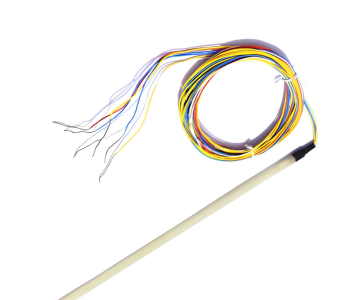
Sheath material: Fibreglass
Sheath dimensions: see tables
Dielectric strength: below
Operating range: 155°C or 180°C
Customised
Class F: 2kv
Class H: 2.5kv
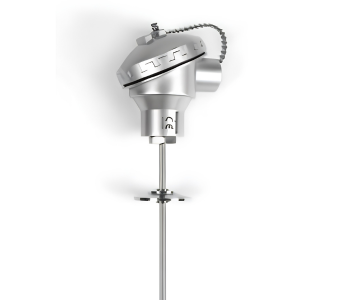
SANITARY RTD
A Sanitary RTD is a temperature-sensing device designed for hygienic applications in industries such as:
Food and beverage processing
- Pharmaceutical manufacturing
- Biotechnology
- Dairy processing
- Medical equipment
AUTOCLAVE SENSOR
An autoclave sensor monitors temperature, pressure, and other parameters within an autoclave chamber to ensure sterilization processes.
Applications:
- Medical sterilization
- Laboratory research
- Pharmaceutical manufacturing Food processing
- Textile industry
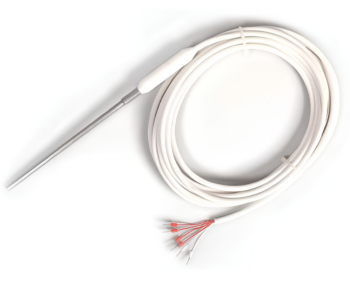
TEMPERATURE SENSOR CALIBRATION
Temperature sensor calibration ensures accurate temperature measurements. Here’s a step-by-step guide:
Pre-calibration checks: Verify sensor integrity and cleanliness. Ensure proper sensor installation and connection.
Reference point selection: Choose a reference point (e.g., ice bath, boiling water) with a known temperature. Ensure the reference point is stable and accurate.
Sensor connection: Connect the temperature sensor to the reference point. Connect the sensor to a measurement instrument (e.g., multimeter, thermometer).
Zero offset adjustment: Adjust the sensor’s zero offset to match the reference point temperature.
Span adjustment: Perform a span adjustment to ensure accurate readings across the temperature range. Verify linearity by checking readings at multiple points within the temperature range.
Repeatability check: Ensure repeatability by taking multiple readings at the same temperature.
Calibration validation: Validate calibration results against the reference point. Document calibration results and sensor performance.
Calibration Types:
Lab calibration: Calibrate the sensor in a controlled laboratory environment.
On-site calibration: Calibrate the sensor at the installation site.
TEMPERATURE CONTROLLER
A Temperature Controller is an electronic device that regulates and maintains a specific temperature set point. It is used in various applications, including:
Industrial processes (e.g., heating, cooling, and ventilation)
Laboratory equipment (e.g., incubators, ovens, and refrigerators)
HVAC systems
Food processing and storage
Medical equipment (e.g., autoclaves, sterilizers)
Types of Temperature Controllers:
- Analog Temperature Controllers
- Digital Temperature Controllers
- PID (Proportional-Integral-Derivative)
- Temperature Controllers On/Off
- Temperature ontrollers Programmable Temperature Controllers
- By using a Temperature Controller, you can maintain precise temperature control, optimize processes, and ensure safety in various applications.
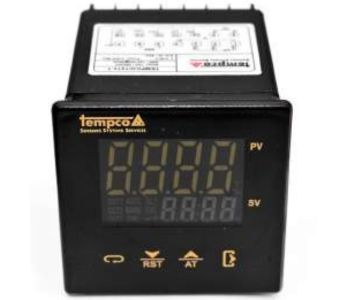
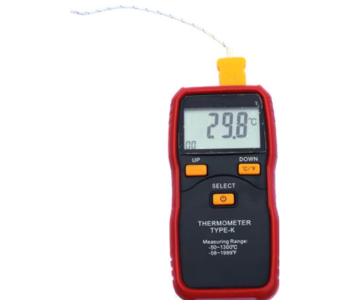
Key features:
Temperature range and accuracy
Display format (e.g., Celsius, Fahrenheit, Kelvin)
Resolution and precision
Response time and update rate
Alarm functions (e.g., high/low temperature, deviation)
By using a Temperature Indicator, you can easily monitor and track temperature changes, ensuring optimal conditions for various applications.
TEMPERATURE INDICATOR
A Temperature Indicator is a device or instrument that displays the current temperature reading. It is often used in conjunction with a temperature sensor or thermocouple to provide a visual representation of the temperature.
Types of Temperature Indicators:
Analog Temperature Indicators (e.g., dial gauges, needle pointers)
Digital Temperature Indicators (e.g., LCD, LED displays)
Temperature Meters (e.g., handheld, benchtop, or panel-mounted)
Temperature Monitors (e.g., data loggers, chart recorders)
TEMPERATURE TRANSMITTER
A Temperature Transmitter is an electronic device that converts a temperature signal from a sensor or thermocouple into a standardized output signal, typically 4-20mA or 0-10V, for transmission to a control system, display, or recorder.
Key features:
Temperature range and accuracy
Sensor input type (e.g., thermocouple, RTD, thermistor)
Output signal (e.g., 4-20mA, 0-10V, digital)
Power supply requirements
Environmental ratings (e.g., IP65, NEMA 4X)
Mounting options (e.g., DIN rail, wall mount)
Configuration options (e.g., scaling, offset, filtering)
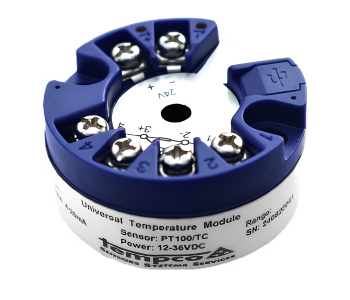
Types of Temperature Transmitters:
Analog Temperature Transmitters
Digital Temperature Transmitters
Smart Temperature Transmitters (with communication protocols like HART, Modbus, etc.)
Wireless Temperature Transmitters
By using a Temperature Transmitter, you can ensure accurate and reliable temperature measurement, transmission, and control in various applications.
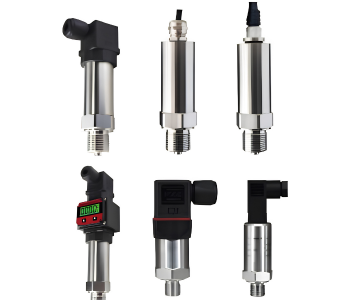
Pressure Transmitter Features:
High accuracy and stability
Compact and rugged design
Low power consumption
Digital communication protocols (e.g., HART, Profibus)
Explosion-proof and intrinsically safe options
PRESSURE TRANSMITTER
A pressure transmitter is a device that converts pressure into an electrical signal, typically 4-20mA or digital output. It measures pressure in various applications.
Pressure Transmitter Applications:
Industrial processes (chemical, oil and gas, power generation) HVAC and refrigeration systems
Aerospace and defense Automotive systems (engine, transmission, and brake)
Medical devices (respiratory, dialysis, and infusion)
Key Specifications:
Pressure range: 0-100 psi to 0-10,000 psi
Accuracy: ±0.1% to ±1% FS (full scale)
Sensitivity: 0.1-10 mV/psi
Response time: 1-10 ms
Output signal: 4-20mA, 0-10V
HEATER COIL
A heating coil consists of a coil of resistance wire, usually a nickel chromium (nichrome) or iron chrome aluminium alloy with a high resistivity and melting point, connected to an electrical power supply
Types of Heater Coils:
Resistive Heater Coils: Convert electrical energy into heat energy through resistance.
Induction Heater Coils: Use electromagnetic induction to heat materials.
Ceramic Heater Coils: Use ceramic materials for high-temperature applications.
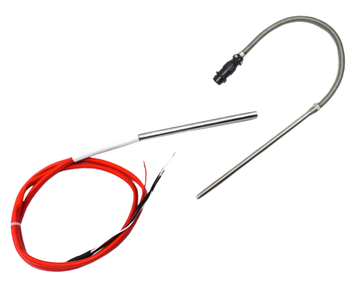
Heater Coil Applications:
Nichrome (NiCr): High-temperature resistance, corrosion-resistant.
Copper: High thermal conductivity, low resistance.
Stainless Steel: Corrosion-resistant, durable.
Ceramic: High-temperature stability, electrical insulation.
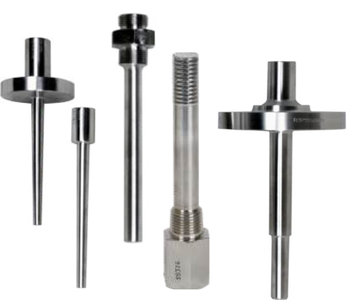
FLANGES (ASME & ANSI FLANGE TYPES)
Blind Flange, Slip-on Flange, Socket Weld Flange, Weld Neck Flange, Threaded Flange
Material: Stainless Steel, Carbon Steel, Inconel, Other Sizes on request
ACCESSORIES
We manufacture fasteners, Flanges and Thermowells.
FASTENERS
Adapter, Adjustable compression fitting (BSP, NPT, ISO Metric)
Material: Stainless Steel, Copper, Nickel
THERMOWELLS
Bar Stock Threaded (BT) (Process threads NPT, BSP or Metric)
Bar Stock Flanged (BF) (Flanges as per ANSI, BS or DIN)
Bar Stock Weld In (BW)
Fabricated Threaded (FT)
Fabricated Flanged (FF)
Fabricated Weld In (FW)
Material: Stainless Steel, Carbon Steel, Inconel, Other Sizes on request
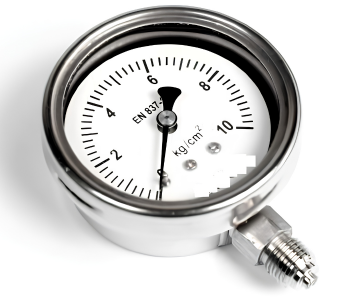
PRESSURE GAUGES
Pressure gauges are available in dial sizes of 63, 100, 150 & 250mm and cover ranges from 6 mbar upto 4000bar with accuracy from 1.6% to 0.25% of f.s. wetted parts include ss316/316l, monel, hastolloy, inconel.
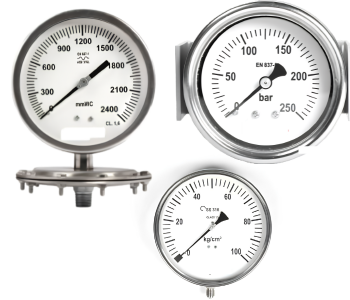
DIAPHRAGM SEALS
Diaphragm seals are available with flanged, threaded, sanitary and other connections, wetted parts available in ss316/316l, monel, hastolloy, inconel, tantalum, titanium, nickel, alloy20, teflon, pvc, etc. and filling fluids silicone, syltherm800, halocarben, food grade oil etc. diaphragm seals are available to suit pressure and differential pressure gauges, switches and transmitters, standard process connections vary from 1/4”nb to 4”nb (class 150# to 2500#).
DIFFERENTIAL GAUGES
Differential pressure gauges are available in dial size of 63,100,115 and 150mm, sensing elements include single or double diaphragms, bellows and magnetic piston, these gauges can measure ranges from 1 mbar to 25 bar with accuracy from 2.5% to 1% and a static pressure rating of upto 400 bar.
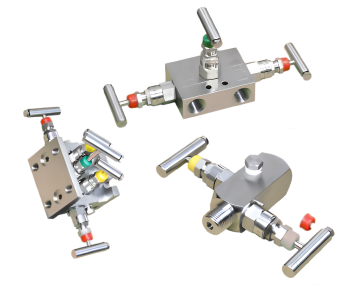
VALVES AND MANIFOLDS
We manufacture needle valves upto 10000 psi rating and 2valve, 3valve and 5valve manifold of direct mounting type, t type and h type coplanar type, available in ss316/ 316l, monel, inconel, hastolloy, duplex and other materials with nace certification.
CALIBRATION PRODUCTS
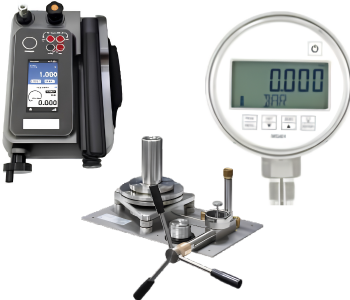
Digital pressure gauges are available in accuracy of 0.25% to 0.025% f,s, and ranges of vacuum to 5000 bar, pressure calibrators with intrinsic safety certification for use in hazardous area, dead weight tester with range upto 2000 bar with uncertainty of +-0.008% of reading.
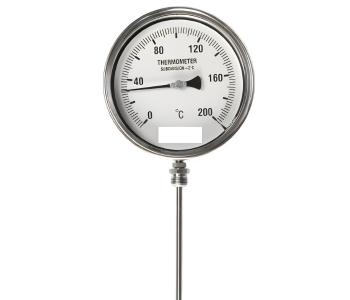
Types of Temperature Gauges:
Bimetallic strip
Gas Filled
Specifications:
Temperature range: -20°C to 800°C
Accuracy: ±1°C to ±5°C Response
Response time: 1-10 seconds
Display type: Analog
TEMPERATURE GAUGE
A temperature gauge is a device used to measure and display temperature readings. Common types include: (Bi-metalic and Gas Filled)
Applications:
HVAC and refrigeration systems
Industrial processes
Automotive systems
Medical equipment
Food processing and storage
ACCESSORIES
we manufacture accessories are like snubbers, gauge savers, syphons, needle valves, gauge cocks, cooling towers and manifolds for pressure instruments. these are available in materials like ss316/316l, duplex, hastolloy, monel and other materials with nace certification.